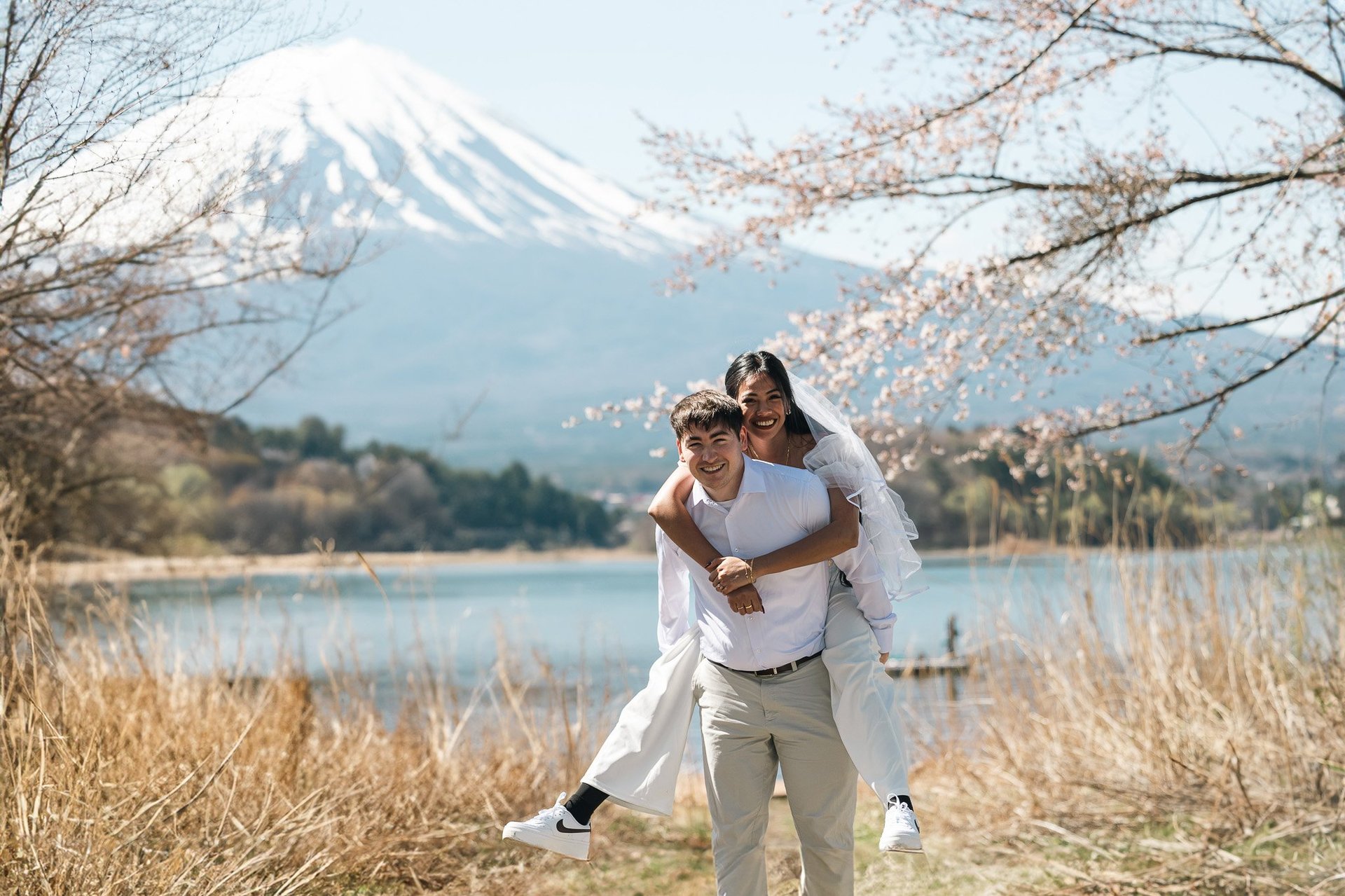
Spring / Cherry Blossom Guide
Mount Fuji Cherry Blossom Photography Guide: Best Time, Locations & Planning Tips
The complete guide to planning spring photography at Mount Fuji — based on real seasonal conditions, not internet myths.
Spring / Cherry Blossom Guide
The complete guide to planning spring photography at Mount Fuji — based on real seasonal conditions, not internet myths.
Spring is the most requested — and most misunderstood — season for photography at Mount Fuji.
Every year, couples and families travel to Japan dreaming of:
What most people don't realize is that spring photography at Mount Fuji requires precise timing, flexibility, and local knowledge.
Cherry blossoms do not bloom everywhere at once
Mount Fuji does not appear clearly every day
Crowds can transform beautiful locations
This guide explains how to plan successful cherry blossom photography at Mount Fuji, based on real seasonal conditions — not internet myths.
Section 1
Cherry blossom season around Mount Fuji typically falls later than Tokyo.
Unlike city locations, Mount Fuji's surrounding areas experience:
This means cherry blossoms may be:
Flexibility is essential.
Section 2
Cherry blossom bloom depends on:
Because of this:
The best spring photoshoots are planned with:
This is especially important for proposals, where pressure is higher.
Learn how planning works on the How It Works page.
Section 3
Certain lakeside zones offer:
Best for:
Couples, families, early morning sessions
Limitations:
Highly weather-dependent, popular during peak bloom
These areas can be stunning during peak bloom, but become extremely crowded mid-day and require careful timing.
Best used for:
Post-proposal portraits, short sessions, early morning shoots
Timing critical
Avoid mid-day crowds
Visually striking, but very crowded with limited space — not ideal for actual proposals.
Best used after the main moment, not during it.
See real-world examples in the Gallery.
Section 4
Why sunrise works best:
Sunrise sessions are ideal for:
Proposals, couples seeking privacy, families with flexible schedules
This timing aligns with curated experiences such as Fuji First Light.
Challenges:
These sessions require:
Flexible expectations, backup plans, crowd-aware positioning
Section 5
Cherry blossom proposals are emotionally powerful, but timing is critical, privacy is harder to achieve, and planning must be precise.
Many successful proposals:
This keeps the moment intimate while still capturing seasonal beauty.
Explore curated options on Mt. Fuji Proposal Experiences.
For non-proposal sessions, cherry blossoms add atmosphere with lower pressure and higher flexibility.
These sessions work well when:
Section 6
Spring colors should complement — not compete with — cherry blossoms.
Cream
Beige
Light gray
Soft blue
Pastels
Avoid:
Layering is important:
Comfort affects posture, expression, and mood.
Section 7
Cherry blossom season is peak tourism season.
Expect:
This does not mean great photos are impossible — but timing matters more than ever, and location choice becomes critical.
Early morning sessions dramatically reduce crowd impact.
Section 8
Spring weather can change quickly.
Clear mornings
Cloud buildup by mid-day
Wind near lakes
Good planning includes:
Learn more about timing in Sunrise vs Sunset at Mount Fuji.
Section 9
Most failed spring photoshoots happen because:
Successful spring photography focuses on:
Experience matters more in spring than any other season.
Section 10
Yes — when planned properly.
Cherry blossoms create:
But the season rewards preparation, not spontaneity.
Cherry blossom photos at Mount Fuji are not about luck.
They're about:
When spring photography is planned well, the results feel effortless.
If you're visiting Mount Fuji during spring and want realistic guidance based on current conditions, your request will be reviewed carefully to recommend the best timing and approach.
Request AvailabilityContinue Reading